You did the obvious things. Better beans, freshly ground. Then a better grinder, because everyone says the grinder matters most. The coffee got a little better and then stopped getting better, and you cannot work out what is left to fix.
Or the other version: your second kettle in three years has just started making a noise like gravel, and you are beginning to suspect kettles are simply disposable now.
There is a variable in both stories that you did not choose and cannot fix by shopping. It comes out of your tap, it is different in Phoenix than it is in Portland, and you can look yours up in about a minute for free.
What “hard” actually means
Hardness is dissolved calcium and magnesium, measured as calcium carbonate in milligrams per litre — the same number as parts per million. The US Geological Survey draws the lines here:
0 to 60 mg/L (milligrams per liter) as calcium carbonate is classified as soft; 61 to 120 mg/L as moderately hard; 121 to 180 mg/L as hard; and more than 180 mg/L as very hard.
US Geological Survey, Hardness of Water
Four bands. That is the entire vocabulary, and the rest of this page is what each one does to you.
The part that eats your equipment
The USGS is blunt about what happens when you heat hard water:
When hard water is heated, such as in a home water heater, solid deposits of calcium carbonate can form. This scale can reduce the life of equipment, raise the costs of heating the water, lower the efficiency of electric water heaters, and clog pipes.
US Geological Survey, Hardness of Water
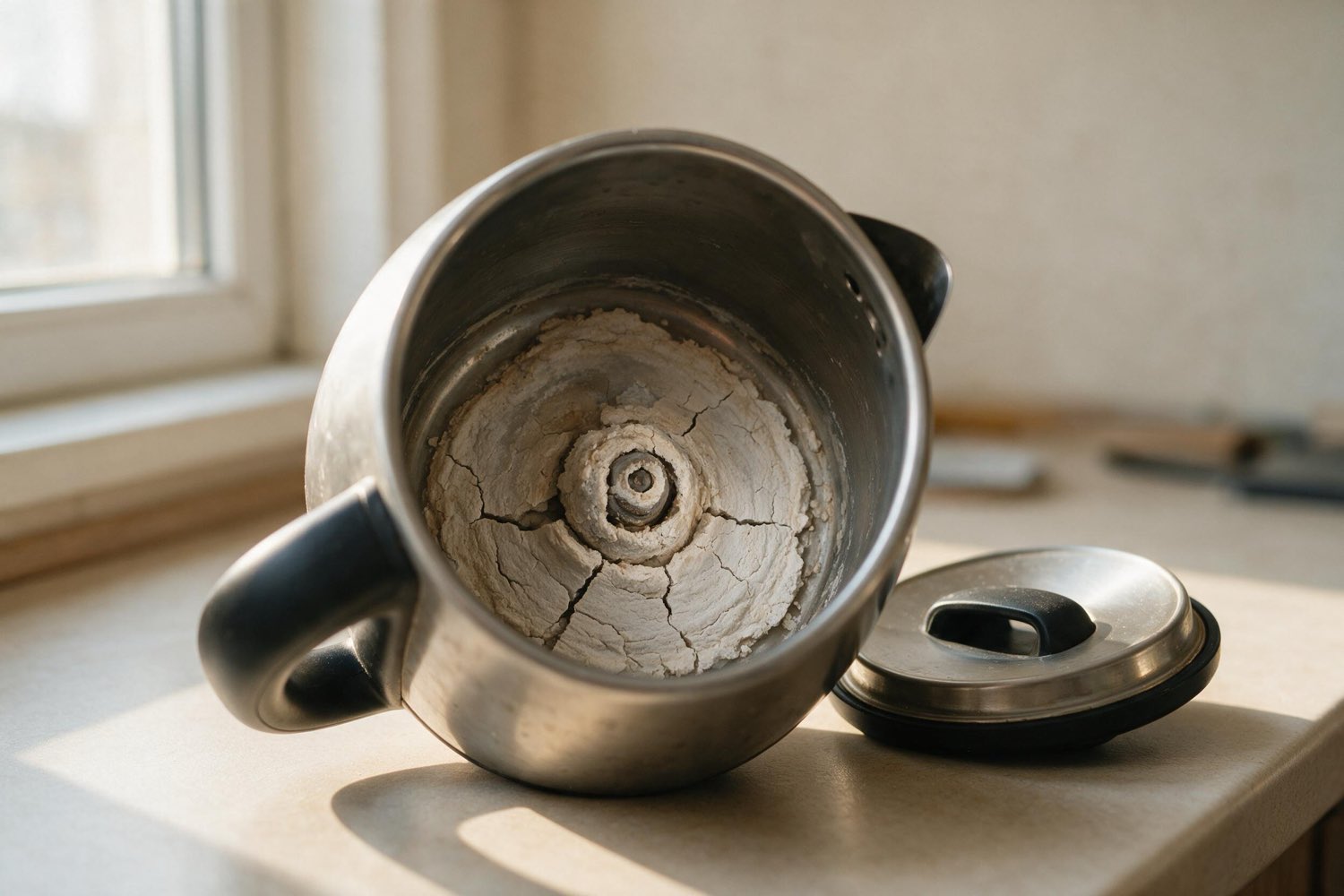
A kettle is a small water heater. So is the boiler inside anything that heats its own water. Above 180 mg/L, scale is not a maintenance task that arrives eventually — it is the thing that will end the appliance, and it starts on the first boil.
Which is why “what kettle should I buy” is the second question. The first is how hard your water is, because the answer changes what you are shopping for. In soft water, almost anything survives and you can buy on looks. In very hard water you are buying something you can get a hand and a brush inside, with a filter you can actually replace — and the beautiful sealed one is a two-year purchase.
Here is where almost everyone is wrong
The instinct is that softer must be better. Scale is the visible enemy; less mineral, less enemy. It is a reasonable instinct and it is wrong.
The Specialty Coffee Association’s water standard puts the brewing target at roughly 50 to 175 ppm of total hardness. Lay that over the USGS bands and it lands across moderately hard and hard — the two bands most people are quietly trying to escape.
Minerals are part of how coffee extracts. Brew with distilled or heavily softened water and the result is the thing people describe as flat: thin, quiet, missing the acidity that made the beans worth buying. If you have ever wondered why the same beans taste better at a café in another city, this is one of the honest answers.
So the two goals genuinely pull against each other. Very hard water destroys equipment. Very soft water protects it and costs you the cup. The useful range is in between — and much of the United States is closer to it than people assume.
Look yours up before you spend anything
Do not guess from your kettle. Two free sources:
- Your water utility’s annual water quality report. Every US public system publishes one, and hardness is usually in it. Search your utility’s name and “water quality report”.
- The USGS hardness map. It shows hardness in surface water nationally, which is enough to tell you which band you are in — and the band is all this decision needs.
If you want a number for your own tap rather than your region, a cheap test strip gives you one. Hardness varies within a city — different sources, different treatment — so a regional figure is where you start, not where you stop.
What to do in each band
Soft — under 60 mg/L
Your equipment will outlive your interest in it. Your problem is the cup. If it tastes thin, that is the water, and no grinder will fix it. Some people add minerals back deliberately; whether that is worth the ritual depends on how much you care, and we are not going to pretend there is one answer to that.
Moderately hard to hard — 61 to 180 mg/L
This is the comfortable band, and much of the country sits in it. Descale on a schedule instead of waiting for a noise, and otherwise buy on the constraints that actually decide things: footprint, clearance, what fits where you live.
Very hard — above 180 mg/L
Buy for descaling, not for looks. A kettle you can reach inside. A machine with a filter you can genuinely replace. A schedule you keep. Consider filtering what you brew with — not to make it soft, but to bring it toward that 50-to-175 window. Much of the Southwest lives here.
What this page will not tell you
How often to descale. That depends on your hardness, your volume and your appliance, and the honest answer is the interval in your own manual, adjusted by what you find when you look inside. We have not tested descaling intervals and we are not going to invent a number so this page feels more complete.
It also will not tell you that a filter fixes everything. A common pitcher filter mostly addresses taste and chlorine; some reduce hardness meaningfully and some barely touch it. The filter’s own specification will say. If it does not say, assume it does not.
The cheapest upgrade in coffee
Every other improvement costs money. Beans, grinder, kettle, scale — each one is a purchase, and each is a smaller step than the one before it.
This one costs a search. Find out which of four bands your tap is in, and you will know whether the flat cup is the water, whether the dead kettle was ever going to survive, and which of the things you were about to buy is actually the next one worth buying.
Why there are no product links on this page
We belong to no affiliate program and have not verified a single filter or kettle against a current listing. This is the page it would be easiest to fill with them, which is exactly why it is worth not doing.
What we checked
- Hardness classification, and the effect of heating hard water — US Geological Survey, Hardness of Water. Both passages quoted above verbatim.
- Brewing target of roughly 50 to 175 ppm total hardness — Specialty Coffee Association water standard, read via secondary summaries rather than the standard itself. Treat the exact figures as approximate and the direction as sound.
- Not checked: descaling intervals, specific filters, and the hardness of any particular city’s supply. Look up your own.